
Step back. See further. Lead better.
Perspective gives leaders options. Options create impact.
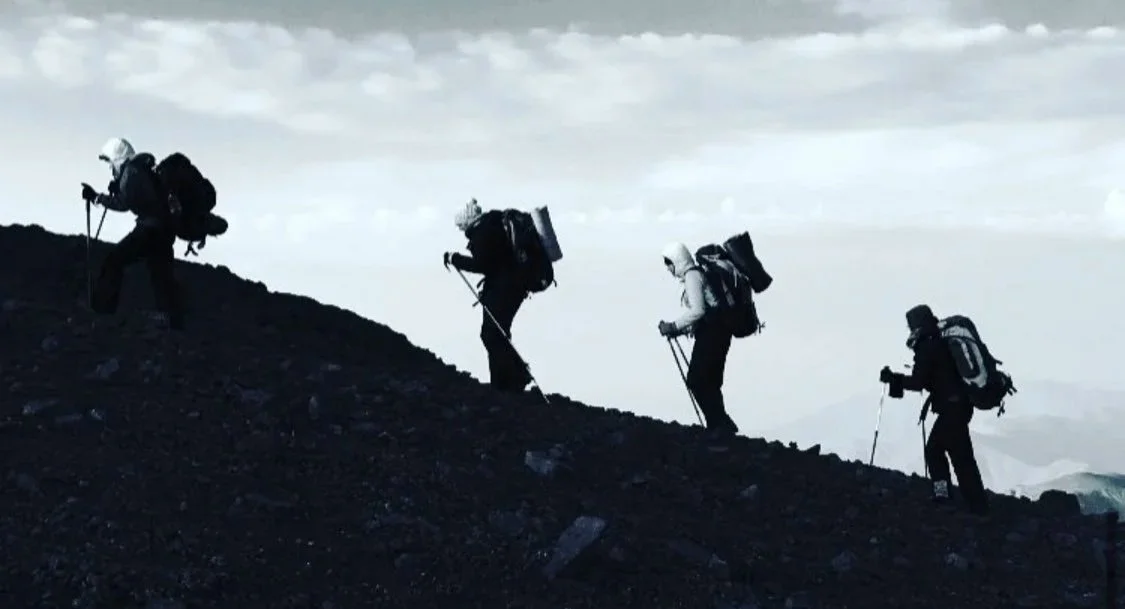
Leadership can narrow a person’s field of view.
The closer we become to a problem, the more dominant it appears. A missed deadline begins to define the whole project. One difficult relationship starts to colour our view of the wider team. A demanding client consumes attention that should be spread across several priorities.
The issue may be real and urgent. The difficulty comes when proximity makes it appear larger, simpler or more isolated than it truly is.
Good leaders know when to step back.
They create enough distance to see the wider system, the patterns forming around the immediate problem and the choices that remain available. This does not mean becoming detached from the work. It means refusing to let the nearest pressure dictate the entire response.
Perspective increases options. Options improve judgement. Better judgement creates greater impact.
The view from inside the problem
When pressure rises, attention tends to contract.
This is useful in some situations. A crisis may require a leader to focus on immediate safety, stabilise the situation and make a clear decision. Problems arise when that narrow focus continues after the immediate danger has passed.
A leader dealing with poor performance may concentrate entirely on the individual. They may overlook unclear expectations, conflicting priorities or a manager who has failed to provide support.
A project delay may appear to be a planning failure. From further back, the leader may see that the organisation repeatedly begins work before scope, authority and resources have been properly agreed.
A team conflict may seem to involve two difficult personalities. A wider view may reveal an incentive system that encourages competition and protects information.
Perspective helps leaders distinguish the event from the conditions that produced it.
Without that distinction, organisations keep solving the visible problem while leaving its source untouched.
The balcony and the dance floor
Ronald Heifetz and Marty Linsky use the image of the balcony and the dance floor to describe an essential leadership discipline.
On the dance floor, the leader is part of the action. They are speaking, deciding, responding and dealing with the immediate demands of the work.
From the balcony, they can observe the movement of the whole room.
Who is influencing the group?
Where is energy increasing or fading?
Which conversations keep repeating?
Who remains silent?
What does the team appear to be avoiding?
Leaders need both positions.
Remaining on the balcony for too long can create distance from reality. Staying permanently on the dance floor makes it difficult to recognise patterns. The skill lies in moving between the two.
A leader may participate fully in a difficult meeting, then step back afterwards and ask what was happening beneath the words. They may deal with an operational problem in the morning, then consider later whether it reflects a broader weakness in systems, culture or capability.
This movement creates perspective without losing contact with the work.
Distance changes the question
The quality of a decision depends heavily on the question being asked.
When a leader stands too close to the issue, the question often becomes:
How do we stop this problem?
From further back, other questions become possible:
Why does this problem keep returning?
What conditions make it likely?
Who benefits from the current arrangement?
What are we rewarding without realising it?
What will this decision make easier or harder six months from now?
These questions do not remove the need for action. They improve the quality of the action taken.
A leader may still need to address the missed deadline, challenge the behaviour or reassure the client. Perspective allows them to do so while also considering the wider pattern.
The immediate response deals with today.
The wider view protects tomorrow.
Perspective creates choice
Pressure often produces false choices.
The leader believes they must either accept poor performance or lose a valued employee. They must either satisfy the client or protect the team. They must either make a rapid decision or appear indecisive.
Stepping back may reveal other routes.
The employee might remain in the organisation but move into a role better suited to their strengths. The client’s demand might be met in stages rather than through an unrealistic commitment. A temporary decision might contain the risk while allowing more information to emerge.
These options were always present. They became visible only when the leader stopped treating the first framing of the problem as the only one.
This is one reason leaders benefit from challenge.
A trusted colleague, coach or team member can often see alternatives that remain hidden to the person carrying the pressure. They are not necessarily more capable. They are standing in a different place.
Good leaders actively seek that different view.
They ask others what they are missing. They listen to the people closest to the operational detail and to those far enough away to see the system. They resist the assumption that seniority provides a complete perspective.
Emotion also affects the view
Leaders are not neutral observers.
Fatigue, frustration, loyalty and fear all shape interpretation. A person who feels undermined may see disagreement as disloyalty. A leader anxious about failure may treat caution as resistance. Someone personally invested in a project may continue defending it after the evidence has changed.
Perspective requires leaders to notice their own position.
What am I feeling?
What do I want to be true?
What part of this situation is personal for me?
Which outcome am I already defending?
These questions are uncomfortable because they expose the possibility that the leader is contributing to the problem.
They are also useful.
Self-awareness does not guarantee objectivity. It reduces the likelihood that personal reactions will pass unnoticed into organisational decisions.
Sometimes the most valuable step back is inward.
Protect time for thought
Perspective rarely appears in a schedule by accident.
The demands of leadership can fill every available space. Meetings run into one another. Messages arrive continuously. Reflection is postponed until the work becomes quieter, although the work rarely does.
Leaders need deliberate distance.
That may involve walking without a phone before an important decision, protecting a short period each week to review patterns, or ending a project meeting with questions that look beyond immediate delivery.
Useful reflection might include:
What is taking a disproportionate amount of attention?
Which issue has appeared in several different forms?
What are we reacting to repeatedly?
Where are we solving symptoms?
Which decision will still matter a year from now?
The aim is not to withdraw into endless analysis. It is to prevent activity from replacing thought.
A full diary can create the appearance of leadership while leaving little room for judgement.
See further, then return
Perspective has value only when it changes what the leader does.
The balcony is a place to observe, not to hide.
Once the wider pattern becomes visible, the leader must return to the work. They need to communicate what they have seen, make the decision, address the behaviour or change the conditions that keep producing the same result.
This is where perspective becomes impact.
A broader view may lead to a different conversation, a clearer priority or a decision to stop work that no longer serves its purpose. It may help the leader protect a relationship without compromising the standard. It may prevent the organisation from solving the same problem for the fifth time.
The strongest leaders can remain present in the detail while refusing to become trapped by it.
They know when close attention is required.
They also know when proximity has started to distort the view.
Step back.
Look beyond the immediate pressure.
Notice the patterns, the people and the consequences that were hidden at close range.
A wider view creates better choices.
Better choices create lasting impact.